Sleep and diet are the foundations of good health, and we all know it. The light we are exposed to every day counts too, and that is easy to forget. We spend most of our days indoors, under artificial light. Yet nearly half of the solar energy that reaches us is infrared, invisible to the naked eye. In autumn and winter we get even less of it, and even in summer few people have time to spend hours in the sun.
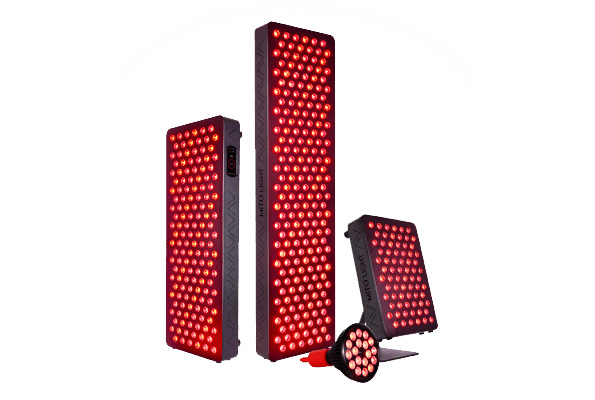
MITO LIGHT® devices use two parts of the solar spectrum: red light and near-infrared light (NIR). This is not the infrared used in saunas, which mainly produces heat (we explain the difference in our article “Differences between red light therapy device and infrared sauna”).
630 to 850 nm is the range in which tissue lets light through best. Shorter wavelengths stop at the surface, longer ones turn into heat. This range penetrates the deepest, which researchers call the optical window. [R]
Red light acts mainly at the surface, on the skin. Near-infrared light goes deeper, down to the muscles, bones and joints. Inside cells, both are associated with the activity of mitochondria, which produce most of the cell's energy. [R] Here are three areas where that energy makes a difference.

1) Recovery and performance
In sport, both red light and near-infrared light are used. Before exercise, a session prepares the body. Afterwards, it supports the recovery of the muscles and tissues you have worked.
Researchers have been studying this for years. In a randomized, double-blind, placebo-controlled crossover trial with 10 professional volleyball players, red and near-infrared light increased the number of repetitions by nearly 13% and delayed the onset of muscle fatigue. [R] A review of 46 clinical trials in volunteers reports that, combined with resistance training, photobiomodulation comes with a larger gain in muscle mass than training alone. [R]
If you train regularly, a session right after exercise can speed up recovery and ease muscle tension. You go into your next workout in better shape. And it is not only for athletes: physically demanding days put the same strain on the body.

2) Skin appearance and elasticity
The condition of your skin reflects your lifestyle: sleep, diet, stress, time spent in the sun. And with age, the body produces less collagen and elastin, the two proteins that give skin its structure and suppleness.
Red light is associated with collagen production, which shows as smoother-looking skin. In a controlled trial with 136 volunteers, after 30 sessions of red light (611–650 nm) or broad-spectrum light (570–850 nm), participants had significantly higher collagen density than the control group. [R]
Red light also supports blood circulation, which brings the skin the oxygen and nutrients it needs. Better circulation contributes to a brighter, more even complexion and to the skin's natural regeneration.

3) Moving freely
Tendons, joints, ligaments and bones form one system in which everything is connected. When one part stiffens, you feel it with every movement: after a day at the desk, on waking up or after a long workout.
Near-infrared light reaches these deep tissues. It contributes to joint flexibility and ease of movement, supports the blood circulation that brings nutrients and oxygen to the tissues, and assists the body's natural recovery processes. It is useful both before and after exercise.
You can light the whole body at once or a specific area, such as the knees, shoulders or back. Everyday comfort comes with regular use.

To get started, simply stand 15 to 50 cm from the panel for 10 to 20 minutes a day. A session fits easily into your routine, in the morning to start the day well or after training. Light does not replace good sleep, a balanced diet or physical activity, but it complements them.
The studies for each of these areas are collected on the Science & Effects page.